Air Flow Meter Reading at Idle Rule of Thumb
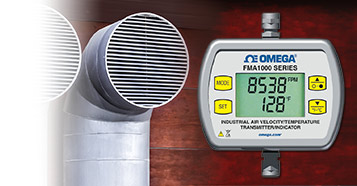 Calculating flow rates through ducts, pipes, hoods and stacks (collectively chosen ducts for our purposes), has never been difficult. The cross-exclusive area of the duct is multiplied past the average air velocity to discover the volume per fourth dimension or flow rate. Simple.
Data collection, accurately and precisely measuring air velocity across ducts, has been a difficult chore. And, poor data drove procedures produce the errors in duct balancing. Measuring air flow with anemometers has been limited in the past by time.
The newest microprocessor-based instruments consummate duct hvac air flow measurement information collection accurately even earlier the patience of the HVAC tech wears out.
How to mensurate air velocity in a duct?
The more than precise question is how to larn the average flow rate measurement across differing cross-sections of duct.
The physics are relatively elementary:
- Air is slowed past friction with contact to the edge of the duct
- The greatest air velocity is achieved under laminar flow conditions in the frictionless middle of the cross-section
- The velocity profile of the duct is dependent on the shape of the duct (minimizing perimeter walls to accomplish cross-exclusive area) and the force pushing the air
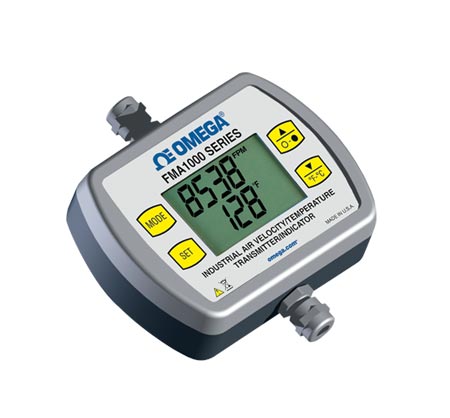
The preferential shapes of ducts and so are round, square, and rectangular in that lodge of efficiency.
Given these facts, how many air period measurements make a good database?
The grid lines which lay out the duct flow measurement points are traverses. The log-linear method provides loftier accuracy (±iii%) in flow totalization by measuring air flow closest the edges of the duct space preferentially. Now, the question is how to measure out cfm in a duct? It volition depend on the shape of the duct itself.
Round Ducts
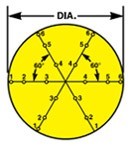
3 traverses, diameters, evenly spaced at threescore° create 6 pieces of pie in a round duct. Three air menses measurements are taken per radius: on the edge; one-third toward the heart; twothirds toward the eye. Notation the air most affected by friction is seemingly over-represented.
A total of 18 readings accurately describes the air flow rate.
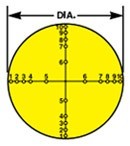
In the case where only two traverses can exist mensurate, set them at 90 degrees and take five samples on each radius. The beginning four evenly spread over the first half of the radius starting at the edge and moving toward the middle. The 5th point is 2-thirds toward the center.
These twenty information points volition not produce as accurate an average as the eighteen with three traverses, simply the results are acceptable.
Airflow in Rectangular or Foursquare Ducts
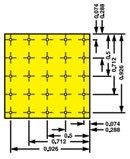
Accurateness demands a minimum of xx-v information points to a maximum of twoscore-nine. A duct side of less than xxx inches requires five traverses. A duct side of greater than thirty-six requires seven traverses. Six for lengths in the middle.
These ducts require the sixteen readings at a minimum virtually the edge (about 7% full distance) with the other ix evenly spread along the filigree. Notice sixty-four percent of the rectangular duct data points will be close to the walls of the duct while only xxx-three percentage of round duct data points reverberate the friction from the walls. This measurement demonstrates the efficiency of the round duct. Which, past the fashion, does non mean round is e'er the best solution.
Get together the information from these readings and merely calculate the mean boilerplate. Or, let your microprocessor practice the work. You have calculated the air flow velocity in the duct.
How to Measure Cross-Sectional Surface area
Sounds piece of cake enough, length multiplied by width or the radius squared times pi.
Iii words: remember the grille.
If no grille is used, the application factor is 1.00. So the crosssectional area of the duct is unmodified.
If the grille is square punched, multiply the gross area by .88. A bar grille is modified by a factor of .78; and a steel strip grille by .73.
The grille serves to wearisome the velocity of air also equally disperse it. Exist mindful of this cistron.
Devices for HVAC air flow measurement
Y'all take measured the air flow, cross-sectional net area and multiplied them together for a menstruation charge per unit.
Q = FAV, where:
F = application gene(see table)
A = designated expanse in square feet
| Grille Type | Application Factor, F | Designated Area |
| None | 1.00 | Full duct area |
| Square Punched | 0.88 | Free (daylight) area |
| Bar | 0.78 | Core Area |
| Steel Strip | 0.73 | Cadre Area |
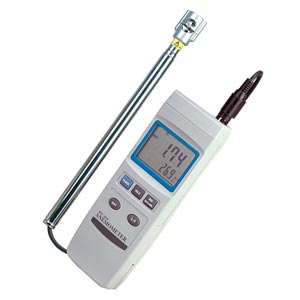
Modern air measurement instruments similar handheld anemometers which offer digital read outs in cubic feet per minute: a self-independent calculator to salve time and frustration for HVAC professionals.
Nosotros believe it is important for technicians to understand the theory of air flow measurement in ducts, to recognize when a data betoken is unlikely to be correct, a false reading, or a adding does not seem correct and should exist double checked. In today's results-now environs, these new technologies speed the process along. Your experience will double-check the process, but this instrumentation collects and double checks raw data speedily.
The new models are sophisticated in how the air flow charge per unit is calculated and output in a readily-usable format. Air duct balancing has become less time consuming and more efficient, more science than art.
WHITE Paper
Download our white newspaper on
Air Flow

Source: https://www.omega.co.uk/technical-learning/how-precise-and-accurate-are-air-flow-measurement-instruments.html
0 Response to "Air Flow Meter Reading at Idle Rule of Thumb"
Post a Comment